
The way we design new commercial facilities is changing. With electricity demand increasing across the country, developers need to think beyond the building’s immediate electrical requirements and consider how it will operate, expand and respond to future energy demands.
That is why solar and battery energy storage systems (BESS) should enter the conversation early in new construction. When these technologies are evaluated alongside the electrical system, project teams have more opportunity to coordinate design, utility requirements, sustainability goals and potential resilience needs.
Energy Is Part of the Building’s Core Infrastructure
Data centers, industrial growth, transportation electrification and new construction are placing greater demands on the U.S. power system. For an individual development, new tenants, EV charging, production equipment or future building additions can also substantially change electrical loads.
Solar and BESS are not separate accessories to be added after the drawings are complete. Their requirements can influence service capacity, distribution equipment, switchgear, transformers, controls and the long-term flexibility of the site.
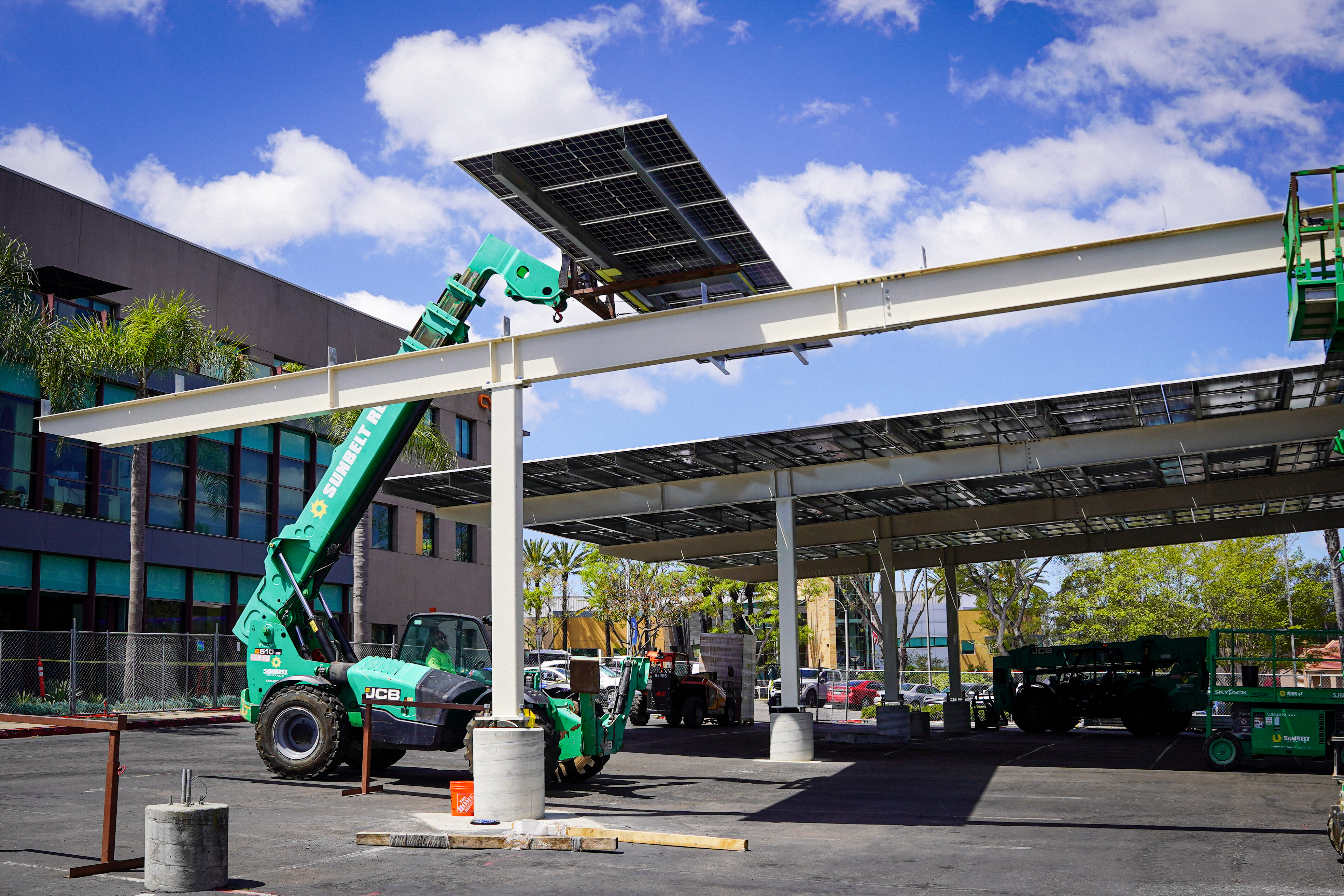
Make Room for Solar and Storage Before Site Plans Are Final
A well-coordinated site plan considers rooftop or canopy solar, battery locations, safe access, equipment clearances, fire and building requirements, and space for electrical infrastructure. These needs must coexist with parking, landscaping, circulation, architectural features and other systems.
Addressing them during early design preserves choices that may be harder to accommodate once construction documents, site layouts and equipment packages are finalized. It can also leave room for phased deployment when a full solar-and-storage installation is not planned on day one.
Design Reliability Into the Project
Reliability can mean different things to different owners. A healthcare facility may need to protect essential operations. A manufacturer may be focused on production interruptions. A hospitality property may prioritize guest services and critical building functions.
BESS can support a resilience strategy, but backup power is not automatic. If continuity during an outage is a goal, the project team must identify critical loads and determine whether appropriate switching, controls, operating modes and system capacity are feasible. Those decisions belong in early electrical design, not at the end of construction.
Coordinate Utility Requirements Early
New developments already face utility planning, service and scheduling considerations. Solar and storage may introduce additional interconnection, protection, metering or export requirements, depending on the utility and project configuration.
Early coordination helps the development team understand these dependencies before they affect equipment selection, construction sequencing or occupancy plans. It also supports a more realistic schedule for procurement and commissioning.
Plan for Sustainability and What Comes Next
On-site solar can advance renewable electricity goals, while storage can add operating flexibility and help a facility use energy more strategically. Together with the right electrical infrastructure, they can give owners a foundation for future expansion, evolving tenant needs and portfolio-wide energy planning.
For developers managing multiple properties, early decisions can also inform repeatable design standards and phased energy strategies rather than isolated, one-off installations. The right configuration will differ by site, but the planning approach can remain consistent.
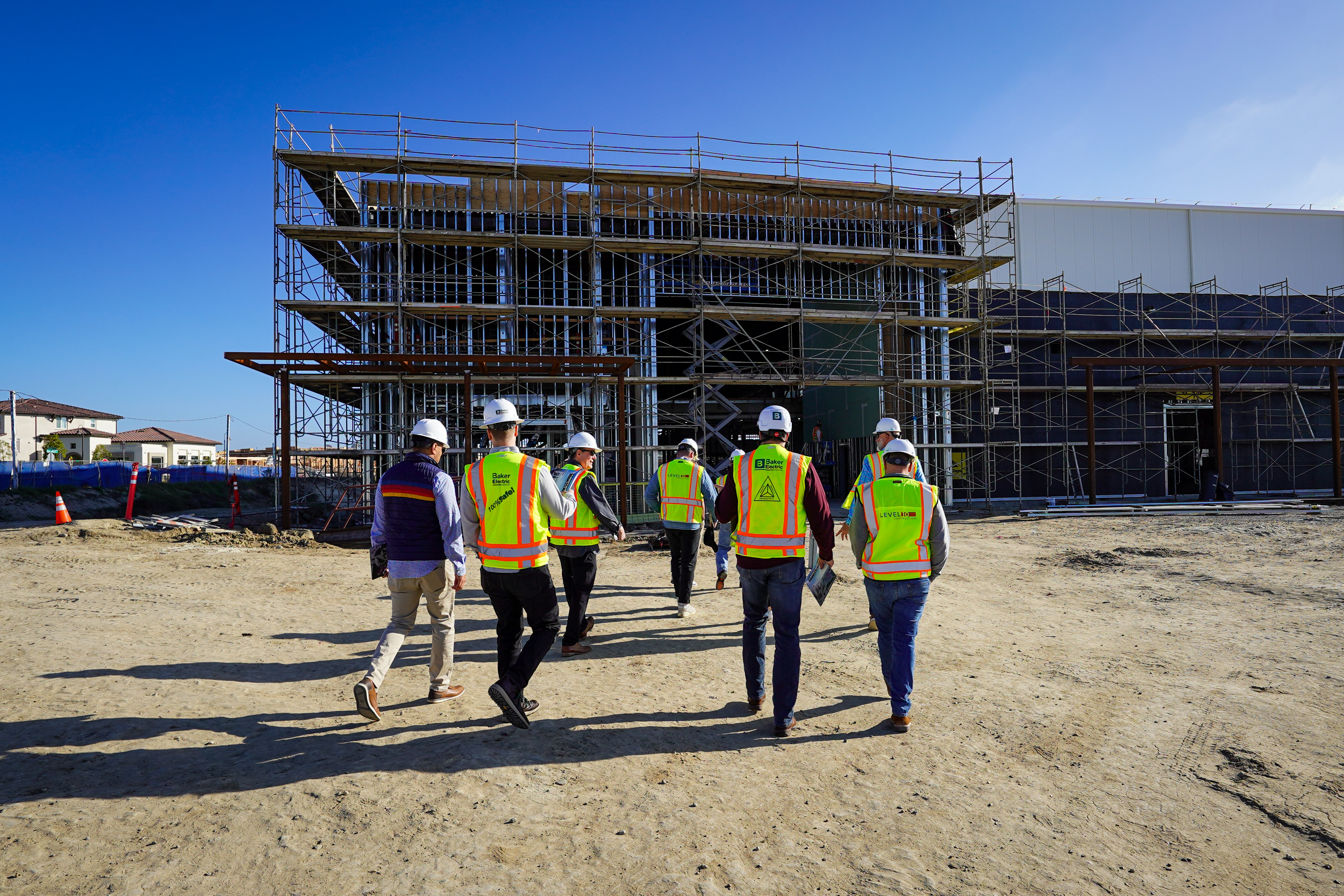
Bring Baker In Early
Baker Electric helps project teams consider commercial solar, battery energy storage and supporting electrical infrastructure as connected parts of a construction plan. Early conversations about feasibility, site conditions, budgets, constructability, utility coordination and resilience priorities give teams a better foundation for informed decisions.
Planning a new facility or development for 2027? Bring Baker in before the drawings are finished. Start with a 2027 Energy Project Planning Session.